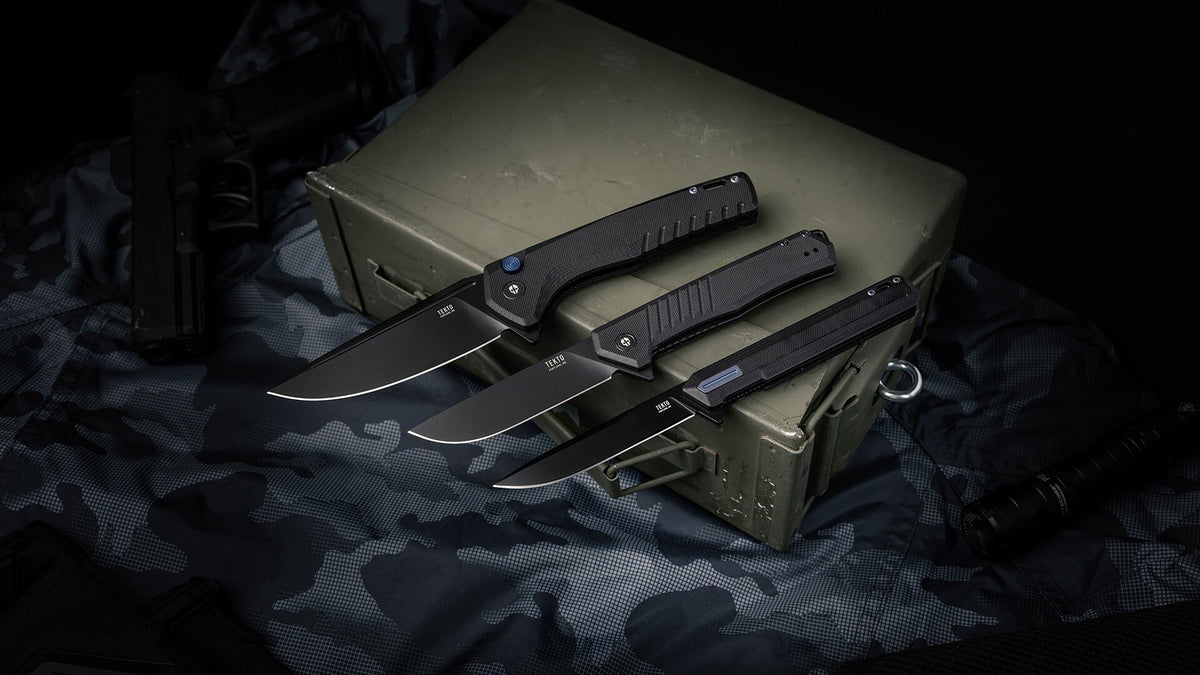
The X1 Atlas is TEKTO's fixed blade: a 3.30-inch CPM MagnaCut drop point, full tang, in a skeletonized G10 handle, with a Kydex sheath, at 3.88 ounces, made in the USA. It is the knife for dressing game, setting up camp and any day that asks more of a blade than a folder should give, and it is the flagship of the line. Here is what it is made of, how it carries, what it is for, where it is legal and how to keep it, and how it compares with the TEKTO folders.
The Short Version
A fixed blade of 3 to 4 inches is the size that does the most real work outdoors, and the Atlas sits in the middle of that range with the best steel TEKTO uses. MagnaCut is a stainless powder steel that holds an edge like a tool steel, resists chipping better than the stainless steels it replaced, and does not rust from blood, salt or a wet sheath. The drop point and the hollow grind make it a slicer first. The full tang means the steel runs the whole length of the handle, so there is no joint to fail. It comes in black, OD green or desert G10, the blade can be engraved, and the Kydex sheath has an adjustable belt clip. If you own one TEKTO folder and want one knife that does what a folder cannot, this is the one.
What It Is Made Of
The blade is CPM MagnaCut, hardened to 60 to 62 HRC, which is the upper end of the range for this steel and the end that favors edge retention. MagnaCut was designed for knives from the start, by metallurgist Larrin Thomas, to close the old gap between edge life, toughness and corrosion resistance, and TEKTO uses it on the Atlas and the A5 Spry Bronze Edition and nowhere else in the line. Our MagnaCut guide covers the chemistry and the comparisons with S35VN and D2. The handle scales are G10, a glass-fiber laminate that does not absorb water, does not get slick when wet and does not crack in the cold. Under the scales the tang is skeletonized, which takes weight out of the handle without taking strength out of the knife, and it is why a full-tang fixed blade of this size comes in under 4 ounces.
The Blade
A drop point carries the spine in a gentle curve down to the tip, which puts the point close to the centerline and keeps it strong. It is the shape that skins without puncturing what is underneath, carves without catching, and still pierces when it has to, which is why it is the most common shape on hunting and camp knives. Our drop point vs clip point guide goes through the alternatives. The grind on the Atlas is hollow, meaning the bevels are ground concave, which leaves a thin edge that slices with little effort and comes back fast on a stone. A hollow grind gives up a little edge strength against a flat or saber grind, and in a 3.30-inch MagnaCut blade that trade is the right one, because the steel's toughness covers it and the slicing is what you use every day. The blade is 3.30 inches long, the handle 4.40 inches, and the knife 7.70 inches overall.
The Handle and the Tang
Full tang means the blade and the handle are one piece of steel, with the G10 scales bolted to either side. There is no pin, no joint and no lock to work loose, and the knife takes a side load, a twist or a hard push that would end a folder. The scales are contoured and textured, 0.47 inches thick, which is enough handle to grip hard in a glove without being a club. A lanyard hole at the butt takes a wrist loop or a length of cord for a pack. The three handle colors are the only difference between the versions. Steel, grind and sheath are the same on all of them.
The Sheath and How It Carries
The sheath is Kydex, a thermoformed sheet that holds the knife by friction with a click and lets go with a pull, and it does not soak up water or hold blood the way leather does. The belt clip is adjustable, so the sheath rides where you want it on the belt. Kydex is loud against a hard surface, which is the trade for a sheath that does not rot, stretch or hold water. Our carry guide covers belt position and the places where no knife goes.
Made in the USA
The X1 Atlas is made in the USA. The blade, the G10 handle and the assembly are all done in the United States. It is the flagship of the line, it is part of why the knife costs what it costs, and the price is in the card below.
What It Is For
Field dressing is the job the Atlas was shaped for. A 3.30-inch drop point in a steel that does not rust from blood opens, skins and quarters a deer without a second knife, and our hunting knife guide explains why a smaller fixed blade beats a bigger one in the field. Around camp it carves tent stakes, makes feather sticks, preps food and cuts cord all day. It is a cutting knife, not a splitting wedge. Prying, pounding and throwing are outside the warranty, so split kindling with an axe and let the Atlas do the carving. As an everyday fixed blade it rides on a belt under a jacket at a weight most folders match, for anyone whose day includes rope, bale twine, packaging and the kind of cut a folder's lock does not love. Our folding vs fixed blade guide says when each belongs in the pocket.
Where It Is Legal
A fixed blade is legal to own in every state. Carrying one is a question of concealment, and the rule of thumb is to carry the Atlas in its sheath on the belt where the handle shows. California treats every fixed blade as a dirk or dagger, bars carrying one concealed and allows open carry in a sheath worn at the waist. New York City bars carrying any knife in open view, so the belt sheath stays home there. Seattle bars carrying a fixed blade in the city. In states whose law turns on concealment, a jacket over the sheath can make it concealed. Our 50-state guide has one line per state and a full page for each, and the fixed blade row on each state page is the one to read.
Care
MagnaCut asks for less than any steel TEKTO has used. Rinse the blade after game or salt water, wipe it dry, and put a drop of oil on it before it goes back in the sheath for the season. Take it out of the Kydex to dry if it has been wet, because a sheath holds moisture against the blade. Sharpen it on ordinary stones, and diamond stones make quick work of it. Our sharpening guide covers the method, and the storage guide covers the off-season. The limited lifetime warranty covers defects in materials and workmanship.
The Atlas Beside the Folders
The F3 Charlie has a longer blade at 3.80 inches and folds into a pocket, and it is the better knife for a day of boxes and cord in town. The Atlas has a shorter blade, a stronger spine, a steel two grades up, and no lock to think about, and it is the better knife for a day in the field. The F1 Alpha is the folder we would pair with it. For the automatic side of the line, the A5 Spry is the OTF that runs the same MagnaCut in its Bronze Edition.
The Atlas and the Line
The fixed blade, the big folder, the work folder, and the OTF that runs the same MagnaCut in its Bronze Edition.


People Are Asking
What are the X1 Atlas specifications?
A 3.30-inch CPM MagnaCut drop point blade with a hollow grind, hardened to 60 to 62 HRC, full tang, a skeletonized G10 handle in black, OD green or desert, 7.70 inches overall, 3.88 ounces, a lanyard hole, and a Kydex sheath with an adjustable belt clip. Made in the USA.
Is the X1 Atlas good for hunting?
Yes. A 3.30-inch drop point in a steel that does not rust from blood is the size and shape that opens, skins and quarters a deer without a second knife, and the Kydex sheath rinses clean. The hunting knife guide explains why a smaller fixed blade beats a bigger one in the field.
Can I baton firewood with the X1 Atlas?
It is a cutting knife, not a splitting wedge. A full-tang MagnaCut blade will survive light work on kindling, but prying, pounding and throwing are outside the warranty. Split with an axe and let the Atlas carve.
Is the X1 Atlas legal to carry?
A fixed blade is legal to own in every state. Carry it in the sheath on the belt where the handle shows. California bars carrying a fixed blade concealed and allows open carry in a sheath at the waist, New York City bars carrying any knife in open view, and Seattle bars carrying a fixed blade. Check your state's page in the 50-state guide.
How do I care for a MagnaCut blade?
Rinse after game or salt water, wipe dry, and oil it before storage. Take it out of the Kydex to dry if it has been wet. It sharpens on ordinary stones, and diamond stones work fastest.