Storing knives well is not about showing off a collection. It is about what the knives look like when you take them out again. A blade put away wet, or left for a season in a leather sheath, comes out spotted. A blade put away dry and oiled comes out exactly as it went in. Here are the rules that matter, then the four ways to hold a collection.
The Rules Before the Cases
Dry every knife completely before it goes away, pivot and clip included. Wipe a thin film of mineral oil or light knife oil over the blade. Store it somewhere cool and dry, with a desiccant pack in any closed case. Keep it out of sunlight, which fades handle materials, and out of its leather sheath, which holds moisture against the steel. Never seal a knife in a plastic bag. Do all that and the case you choose is a matter of taste. Skip it and no case will save the blade. Our maintenance guide covers the cleaning and oiling that come first.
Protective Cases: Built for Safety
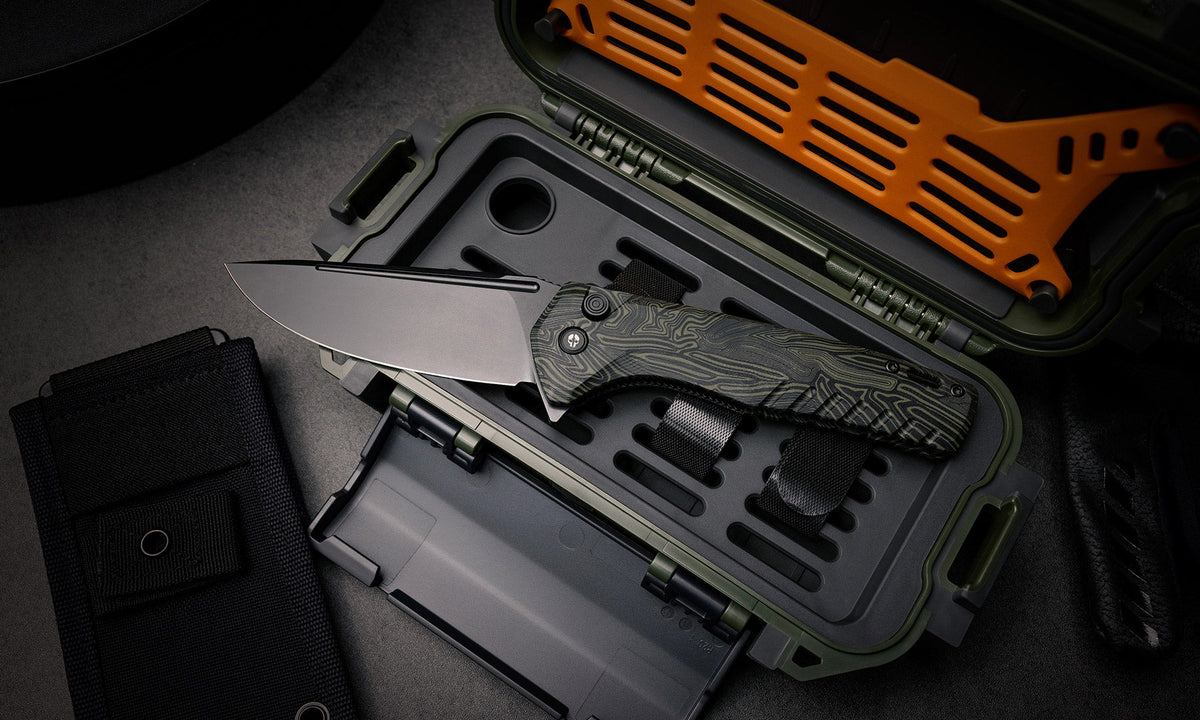
A hard case is the strongest defense against damage and weather. Crush-proof, sealable cases such as Pelican's are the standard. Models with pre-cut foam give each knife its own bed, though a larger fixed blade may need the foam cut to fit, and the smaller sizes suit a few favorite knives plus the rest of an everyday carry kit. The seal that keeps water out also keeps moisture in, so a desiccant pack goes in with the knives.
Knife Rolls: Classic and Portable
A knife roll is the old way and still a good one. A roll with a dozen or more slots holds a mid-sized collection in a package that fits a bag or a drawer, and a folder such as the F3 Charlie slips into a standard slot. Longer fixed blades may not. Many rolls hang open on a hook, which turns them into a small blade wardrobe.
Display Cases: Protect and Show
For the pieces you want to look at, a glass-fronted display case does both jobs: it keeps dust and hands off the knives and makes them part of a room. The trade is light. Keep the case out of direct sun so handle materials, Damascus patterns and coatings do not fade, and open it now and then so the air inside does not go stale.
Sheaths and Pouches: For the Knife You Carry
For a single knife, a pouch or sheath is the practical answer, and for the knife you carry every day it is the right one. A pouch keeps the blade off keys and coins and the pocket clip off the pocket. A Kydex sheath carries a fixed blade safely and dries fast. Both are for carrying, not for months in a drawer.
Whatever you choose, the goal is the same: less wear, no moisture, and a knife you can reach. Pick by the size of the collection and how much of it you want to see, and keep the blades dry, oiled and out of the sun.
Knives Worth Storing Properly
Damascus, forged carbon, wood inlays and MagnaCut: the handles and steels that reward a dry drawer.


People Are Asking
Should I store a knife in its sheath?
Carry it in the sheath, store it out of it. Leather holds moisture and the chemicals used to tan it can stain steel over months. Kydex is better but still traps water if the knife goes in wet. For long storage, oil the blade and keep it in a breathable sleeve.
Should knives be stored open or closed?
Closed, with a drop of oil on the pivot. A closed folder protects the edge and the lock, and an OTF stores retracted. Store an automatic with the safety on if it has one.
How do I keep stored knives from rusting?
Dry them completely, wipe a thin film of mineral oil over the blade, and keep them somewhere cool and dry with a desiccant pack in the case. Check them every few months. Never seal a knife in a plastic bag, which traps the moisture that starts rust.
What is the best way to store a knife collection?
A foam-lined protective case for knives that travel or need to be safe from damage, a knife roll for a mid-sized collection that moves around, and a display case for the pieces you want to look at. The knife you carry daily lives in a pouch or on its clip.