Taking care of a knife is most of owning one. Cleaning slows wear, oil keeps the pivot smooth and the steel free of rust, and the right storage means the knife you put away in October is the knife you take out in May. The same routine covers a hunting knife and a folding knife. The folder just has a pivot and a lock to think about as well.
Use It for What It Is
The fastest way to shorten a knife's life is to use it as something else. A hunting or folding knife is for cutting. It is not a pry bar, a screwdriver or a hatchet. Batoning firewood with a folder loads the pivot and the lock in ways they were never meant to take, and prying with any blade is how tips break. Keep a dedicated tool for those jobs and the knife stays a knife.
Clean It After Every Use
Dirty knives go dull first and rust second. After use, rinse the blade under warm running water with a little dish soap, work any grit out of the pivot and the lock, and dry it completely with a cloth. Do not leave it to soak. Sweat is the quiet enemy, because it carries salt that pits steel, so a knife that has been in a hand all day gets wiped down before it goes back in the pocket. Clean the handle as well as the blade. For the full method on an automatic, including how to reset one, see our OTF cleaning guide.
Oil the Pivot and the Blade
A drop of light oil on the pivot after cleaning keeps a folder opening smoothly and keeps water out of the works. A thin film on the blade protects the steel between uses. Gun oil or a dedicated knife oil both work, and food-grade mineral oil is the choice if the knife will touch food. Keep oil off the handle unless its maker says otherwise: wood takes a wax, and G10, carbon fiber and aluminum need nothing at all.
Keep the Edge
A knife used every week needs a touch-up every month or two. A few passes on a ceramic rod or a pocket diamond sharpener at the factory angle, about 20 degrees per side on every TEKTO blade, bring the edge back, and a bench stone does the heavier work when a touch-up no longer helps. Our sharpening guide covers the method. A chipped edge or a badly rolled one is the time for a professional sharpener rather than more passes.
Store It Dry
Store knives in a cool, dry place away from humidity. A sheath is for carrying, not storing: leather holds moisture and the chemicals in it can stain steel, so a knife left sheathed for months can come out spotted. For long storage, oil the blade lightly and keep it in a breathable sleeve or a dry drawer, never a sealed plastic bag, which traps the moisture that causes rust. How to store your knives goes into the details.
Knives That Reward the Routine
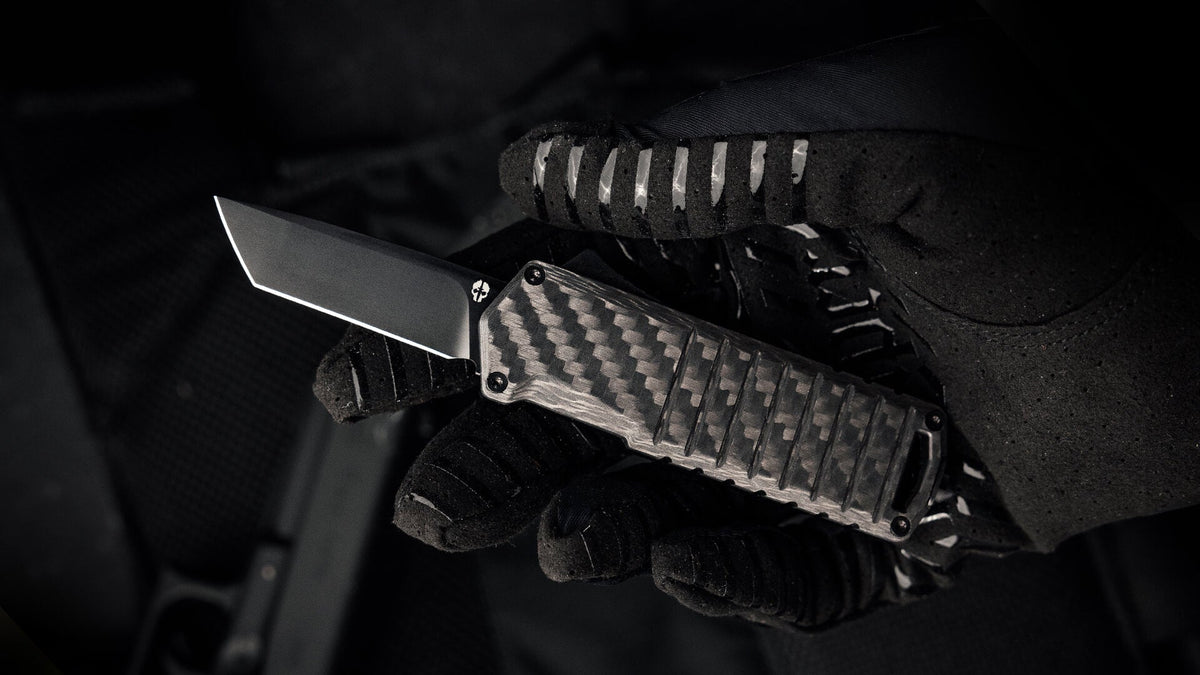
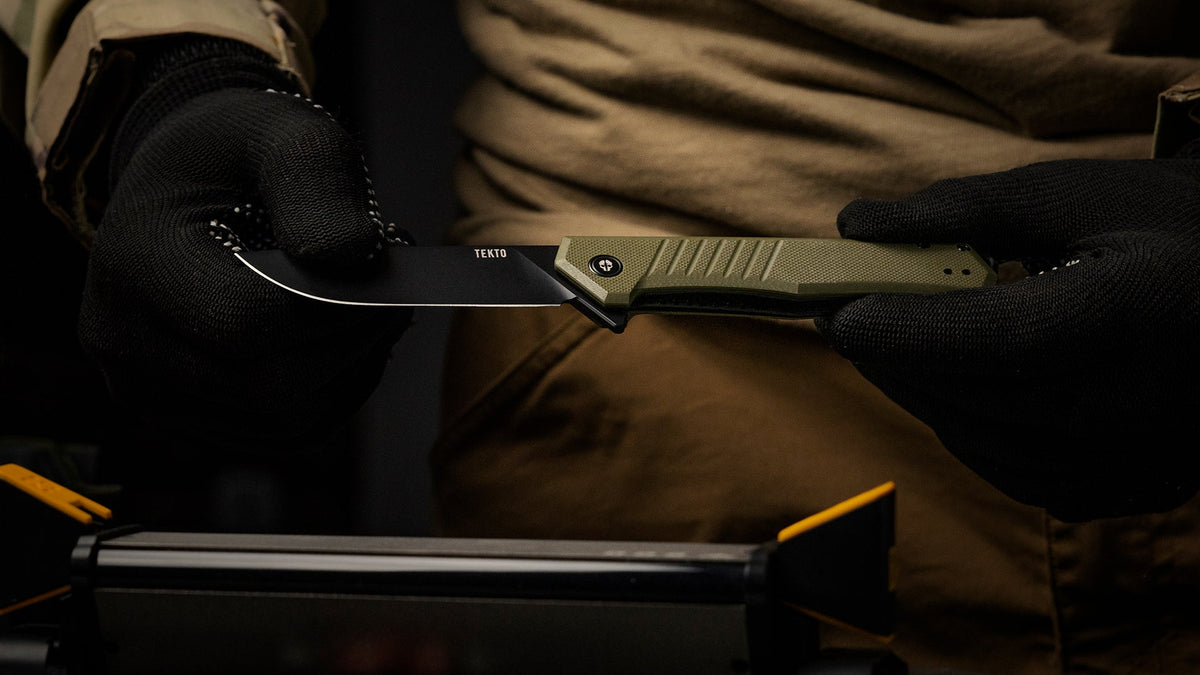
Two folders, the fixed blade and the everyday OTF: each one cleans, oils and stores the same way.


People Are Asking
How often should I oil a folding knife?
A drop on the pivot after every cleaning, and a thin film on the blade whenever the knife will sit unused for more than a week or two. A knife carried daily in a dry pocket needs oil about once a month.
What oil should I use on a knife?
Any light machine oil or gun oil works on the pivot and the blade. If the knife will touch food, use food-grade mineral oil. Keep oil off wood handles. Use a wax instead. G10, carbon fiber and aluminum handles need nothing.
Can I store a knife in its sheath?
Carry it in the sheath, store it out of it. Leather holds moisture and the tanning chemicals in it can stain steel, so a knife left sheathed for months can come out spotted. Store the blade oiled, in a breathable sleeve or a dry drawer.
How do I know when the edge needs sharpening?
When it slides on a sheet of paper instead of slicing it, or when you find yourself pressing harder than you used to. A few passes on a ceramic rod at the 20-degree factory angle fixes it. If that no longer helps, the edge needs a stone.