Why an OTF Needs Cleaning
Blade retracted, spray a little light oil into the mouth of the handle, cycle the blade ten times, blow it out with compressed air, swab what you can reach, and put a drop on the slider. Ten minutes, no tools, no disassembly.
Every time the blade fires and retracts, it carries whatever is at the mouth of the handle into the track: pocket lint, dust, sand, skin oil, the last cleaning's leftover oil. A folding knife is open. You can see the pivot and wipe it. An OTF is a closed box, so the debris collects on the carriage and the main spring where you cannot see it, and the knife slows down a little at a time until one day it misfires.
The signs are a blade that deploys slower than it used to, grinding or resistance when you fire, a slider that feels stiff or sticky, a blade that does not lock cleanly at the end of its travel, and a blade that comes off track more often. Any one of them means it is time.
What You Need
| Item | What it does |
|---|---|
| Light knife or gun oil (Rem Oil is the one in our video) | Loosens the grime and lubricates in one pass |
| Compressed air | Blows the loosened debris out of the track |
| Cotton swabs | Reach the mouth of the handle and the blade channel |
| Microfiber cloth | Wipes the blade and handle |
| A towel | Catches the dirty oil. This gets messy |
| A cut-resistant glove | For the step where you hold the blade |
No tools, no screws, no bench. The whole kit fits in a drawer.
Do Not Take It Apart
A folding knife comes apart with a Torx driver and goes back together the same way. An OTF does not. The main spring is under tension, the blade is held to its carriage by small spring-loaded hooks that have to be aligned on reassembly, and the parts are easy to lose. Opening the handle risks injury and voids the TEKTO warranty. Everything below is done through the mouth of the handle and the slider slot, the same openings the lint came in through. If a problem survives a cleaning, email support@tektoknives.sbs rather than reaching for a screwdriver.
Clean and Oil in Four Steps

TEKTO's cleaning video: oil, air, swabs, and a drop on the button.
- Oil into the handle. Retract the blade. Spray a short burst of light oil into the mouth of the handle, where the blade exits, and a little into the slider slot. Tilt the knife so the oil runs down into the mechanism. A short spray, not a soak: oil that has nowhere to go turns into paste.
- Cycle it and blow it out. Over the towel, fire and retract the blade ten times. The oil loosens the debris and the blade carries it toward the mouth. Now blast compressed air into the mouth of the handle and the slider slot from several angles. Dirty oil and lint come out. That is the point. Repeat the air once more.
- Swab what you can reach. With the blade out and locked and a glove on the hand that holds it, run cotton swabs along the blade channel, inside the mouth of the handle, and down the spine and flats of the blade. Wipe the blade and the handle with the microfiber cloth.
- A drop on the slider. Put one drop of oil at the front and one at the back of the slider, cycle the blade a few times to work it in, and wipe off anything that shows. Fire it once more. It should snap out and back the way it did the day it arrived.
Which Oil to Use
| Oil | Use it? | Why |
|---|---|---|
| Rem Oil or another light gun oil | Yes | Thin enough to reach the carriage, cleans and lubricates in one pass. The one in our video |
| Ballistol or a light knife oil | Yes | Same job, same weight |
| WD-40 | As a flush only | It displaces water and loosens grime, but it is not a lasting lubricant and leaves a film that holds lint. Follow it with a light oil |
| Grease, 3-in-1, motor oil, chain lube | No | Too thick: slows the carriage, thickens in the cold, and collects lint |
| Soap and water | Blade and handle exterior only | Water in the track rusts the spring. Never into the handle |
A drop or two is the dose. More oil does not mean more lubrication. It means more lint, and a sluggish knife a month from now.
How Often
| How you use it | Clean and oil |
|---|---|
| Light carry, occasional use | Once a month |
| Daily carry, moderate use | Every two weeks |
| Hard use, outdoors, sand or wet | Weekly, and the same day after sand, salt water or a soaking |
| Any knife | The first time it misfires or feels slow |
When in doubt, hold the knife up to a light and look into the mouth of the handle. Visible lint, or a dry, dull blade surface, means it is time.
Keeping the Edge
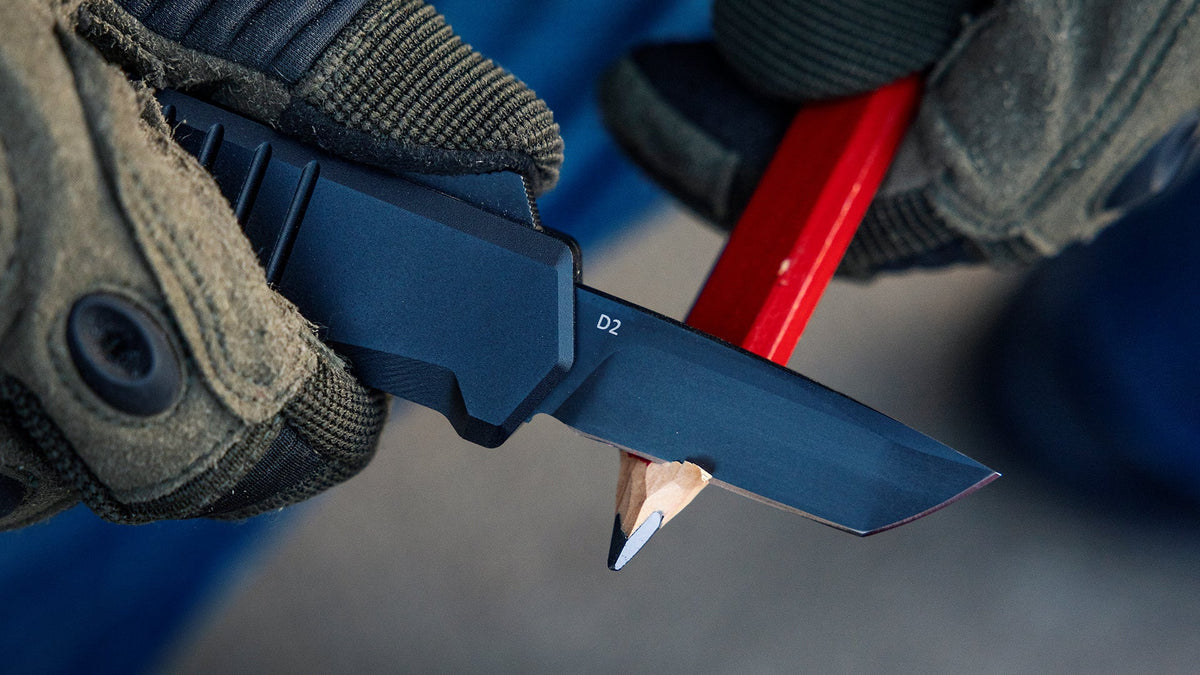
A dull blade needs more force to cut, and more force is how hands get cut. Touch the edge up often on a ceramic rod rather than regrinding it after it has gone dull. A few passes every few weeks is enough. Keep the factory angle, about 20 degrees per side on TEKTO blades. D2, on the A2 Badger and A4, is slow on ordinary stones and wants a ceramic rod or a diamond plate. S35VN, on the A5 Spry and A7 Zastava, sharpens a little more easily. On an OTF, sharpen with the blade out and locked, the handle held firmly, and your fingers behind the edge. Our sharpening guide covers the method. If you would rather not, TEKTO sharpens TEKTO knives. contact support to arrange it.
Storage and Carry
Wipe the blade dry before the knife goes away, especially after sweat, rain or salt air, and store it retracted. If it will sit for more than a few weeks, wipe a thin film of oil on the blade first. A dry drawer, a case or a knife pouch is right. A bathroom, a damp basement or a car in winter is not. For daily carry, give the knife its own pocket, clipped the same way every day. Keys and coins in the same pocket are how grit gets into the track.
If It Still Misfires
Cleaning fixes a slow, gritty or sticky knife. It does not put a blade back on track. That takes a thirty-second reset, pinching the blade by its flats and pulling it out to the click, and the reset guide walks through it along with every other OTF problem. If the knife comes off track again after a cleaning and a correct reset, stop and email support@tektoknives.sbs.
TEKTO OTF Knives
Four double-action OTFs. The routine above is the same for every one.
-
-
-
-


A5 Spry Mini
Regular price $179.99Regular priceUnit price per


People Are Asking
Can I clean my OTF knife without taking it apart?
Yes, and you should. Oil through the mouth of the handle, cycle the blade, blow it out with compressed air and swab what you can reach. The track is open at both ends. Everything that got in can be flushed out the same way. Disassembly voids the warranty.
What is the best oil for an OTF knife?
A light gun oil such as Rem Oil, or a light knife oil such as Ballistol. They are thin enough to reach the carriage and spring and they clean as they lubricate. Avoid grease and heavy oils.
How do you oil an OTF knife?
Blade retracted, spray a short burst into the mouth of the handle and a little into the slider slot, tilt the knife so it runs in, cycle the blade ten times, then blow out the excess with compressed air. Finish with a drop at each end of the slider.
Can I use WD-40 on an OTF knife?
As a flush, yes. It loosens grime and drives out water. It is not a lasting lubricant and it leaves a film that holds lint, so follow it with a light oil and wipe off the excess.
How often should I clean an OTF knife?
Monthly for light carry, every two weeks for daily carry, weekly for hard or outdoor use, and the same day after sand or salt water. Also the first time it misfires or feels slow.
How do I know when my OTF knife needs cleaning?
Slower deployment, grinding or resistance when it fires, a stiff or sticky slider, a blade that does not lock cleanly, or a blade that comes off track more often. Look into the mouth of the handle under a light. Visible lint means it is time.
Can I wash my OTF knife with water?
The blade and the outside of the handle, yes, with a damp cloth and dried straight after. Never run water into the handle. It sits on the spring and the carriage where you cannot dry it, and that is how an OTF rusts from the inside.
What angle should I sharpen an OTF blade at?
Match the factory angle, about 20 degrees per side on TEKTO blades, and touch the edge up on a ceramic rod before it gets dull. For D2 blades use ceramic or diamond. Ordinary stones are slow on it.