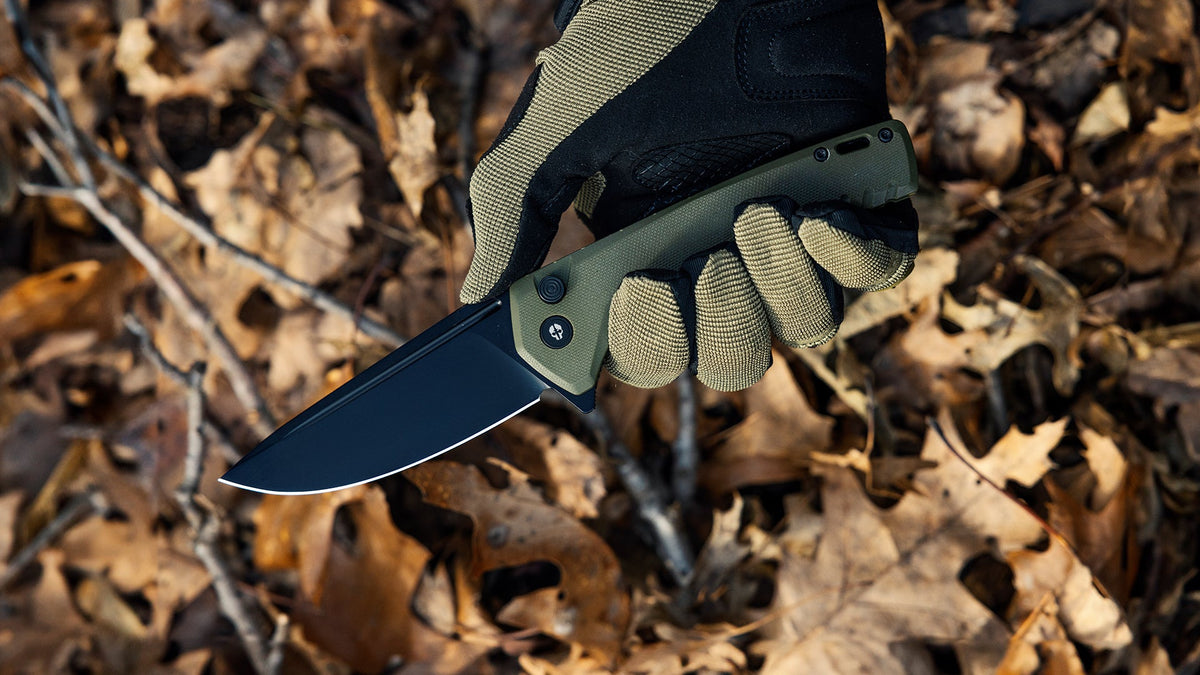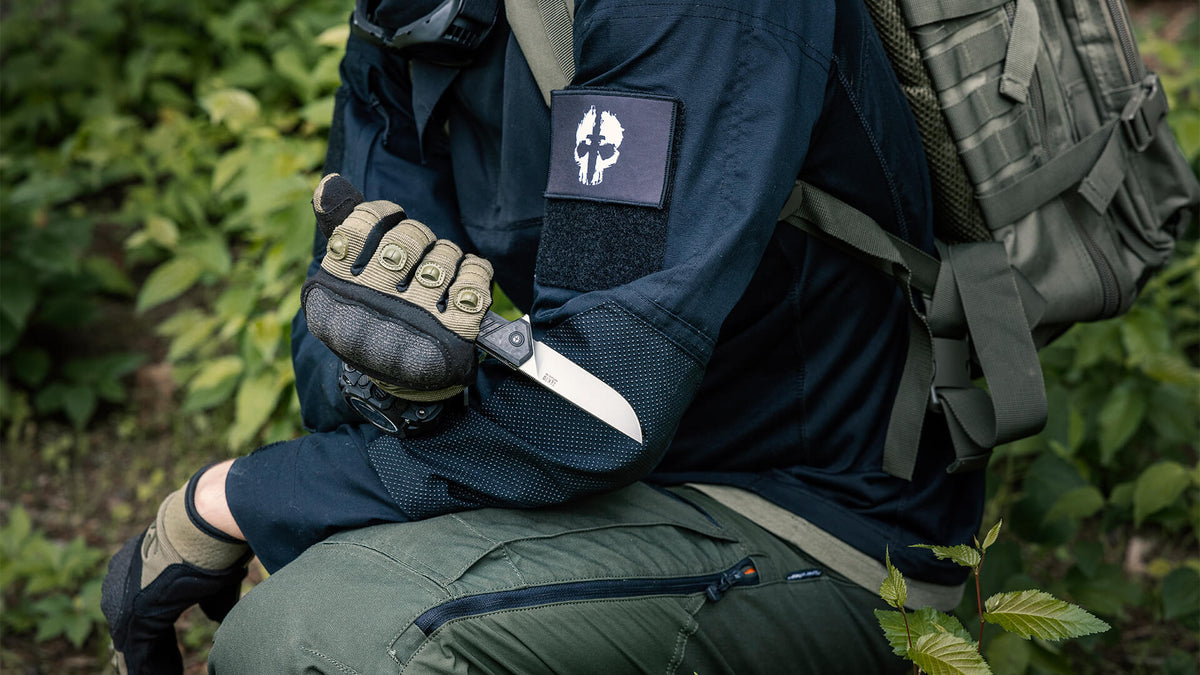
Foraging is a rewarding way to spend time outdoors and bring something home for the table, whether that is a pint of blackberries, a bag of fiddleheads or a handful of dandelion greens. Most of it is hand work, and the rest is knife work: trimming, cutting, husking. A folding knife is the forager's tool because it is small, sharp and always in the pocket. Here is what it does for each find, and how to harvest without hurting the plant.
Why a Folding Knife
A folder fits a pocket or a pack pocket, so it is there when both hands are already in the brambles. The blade closes into the handle between uses, which is the right thing with a knife that comes out and goes away twenty times in a morning. A good one opens with one hand, holds an edge through a season of stems, and wipes clean. For a 3-to-3.5-inch blade with a solid lock, the F1 Alpha and F3 Charlie are the two we would carry.
Harvesting Blackberries and Blueberries
Berries are the most popular wild harvest and the easiest. Look for plump, fully ripe fruit. It comes off the stem with a light pull and leaves the unripe ones for next week. The knife earns its place on the thorny canes: cut away the branches that block the good fruit rather than reaching through them. Be gentle and carry the berries in something rigid, because a bag crushes them.
Gathering Fiddleheads
Fiddleheads, the coiled spring fronds of the ostrich fern, are a short-season delicacy that needs careful harvesting. Be certain of the species. Only ostrich fern fiddleheads are the ones to eat. Cut each one about an inch above the ground with a clean slice, take no more than two or three from any crown so the plant keeps growing, and cook them thoroughly, since raw or undercooked fiddleheads can make you ill.
Collecting Walnuts
Wild walnuts are a rich find hidden inside a tough green husk. Gather the ones that have fallen and are still green, score the husk around with the knife and peel it back to the hard shell, and wear gloves, because the husk stains everything it touches. Dry the nuts for a few weeks before cracking them.
Picking Dandelions
The whole dandelion is edible, flowers to roots, and it grows everywhere you are allowed to pick. Cut the leaves and flowers close to the ground with the knife. For the root, loosen the soil with a stick or a trowel and pull. Let the knife cut, not dig, because digging with the tip is how tips break and how grit gets into the pivot.
Caution With Wild Mushrooms
Foraging is a pleasure right up until the mushrooms. Many wild mushrooms are poisonous, several deadly ones look like edible species, and a knife is no help in telling them apart.
- Do not harvest or eat wild mushrooms unless you have real training and experience.
- Confirm every find with an expert or a reliable regional field guide, never a phone app alone.
- When in doubt, leave it out.
A sharp folder, a rigid container and a good field guide cover almost everything a forager needs. Keep the knife clean after a morning of sap and berry juice. Our maintenance guide covers the two minutes that keep it sharp for the next trip. Happy foraging.
Folders for the Trail
Light, one-hand opening, and easy to wipe clean after a morning in the brambles.


People Are Asking
What size knife is best for foraging?
A folder with a 3-to-3.5-inch blade that opens with one hand. It trims stems, husks walnuts and cuts greens without being too big to control, and it rides in a pocket while both hands are in the berries.
Are fiddleheads safe to eat?
Ostrich fern fiddleheads are, once cooked thoroughly. Raw or undercooked ones can make you ill. Be sure of the species, take no more than a few from each crown, and boil or steam them before any other cooking.
Should I use my knife to dig up roots?
Loosen the soil with a stick or a trowel and let the knife do the cutting. Digging with the tip is the fastest way to snap it, and dirt in the pivot is the fastest way to a gritty folder.