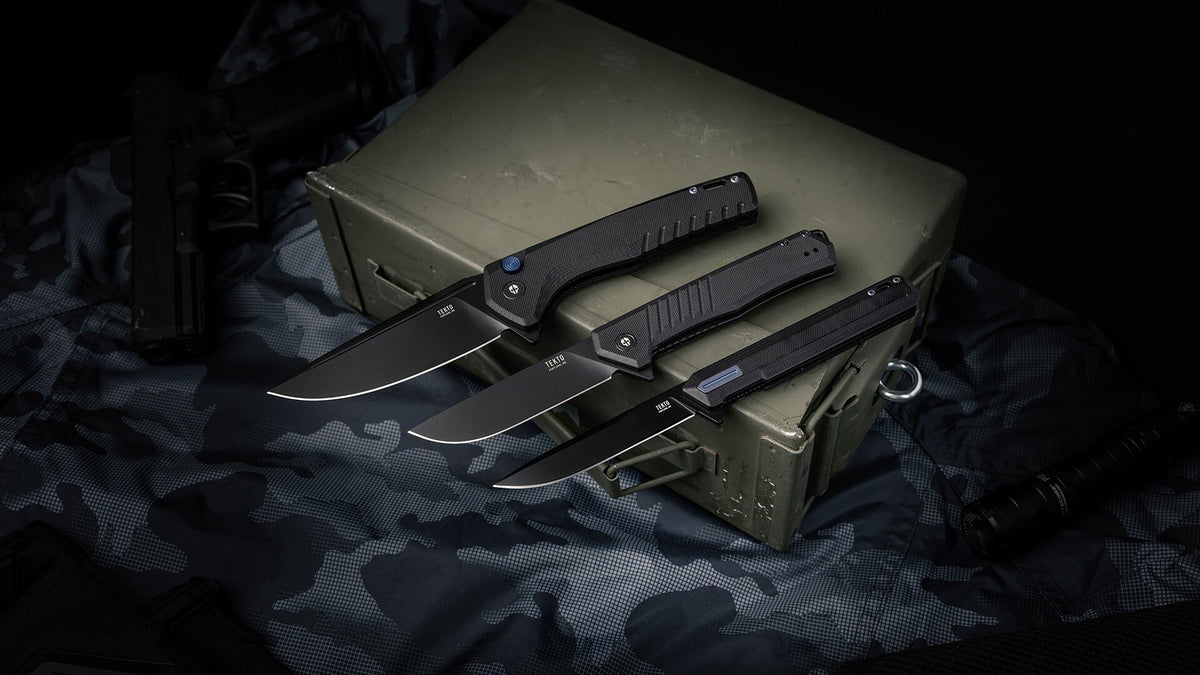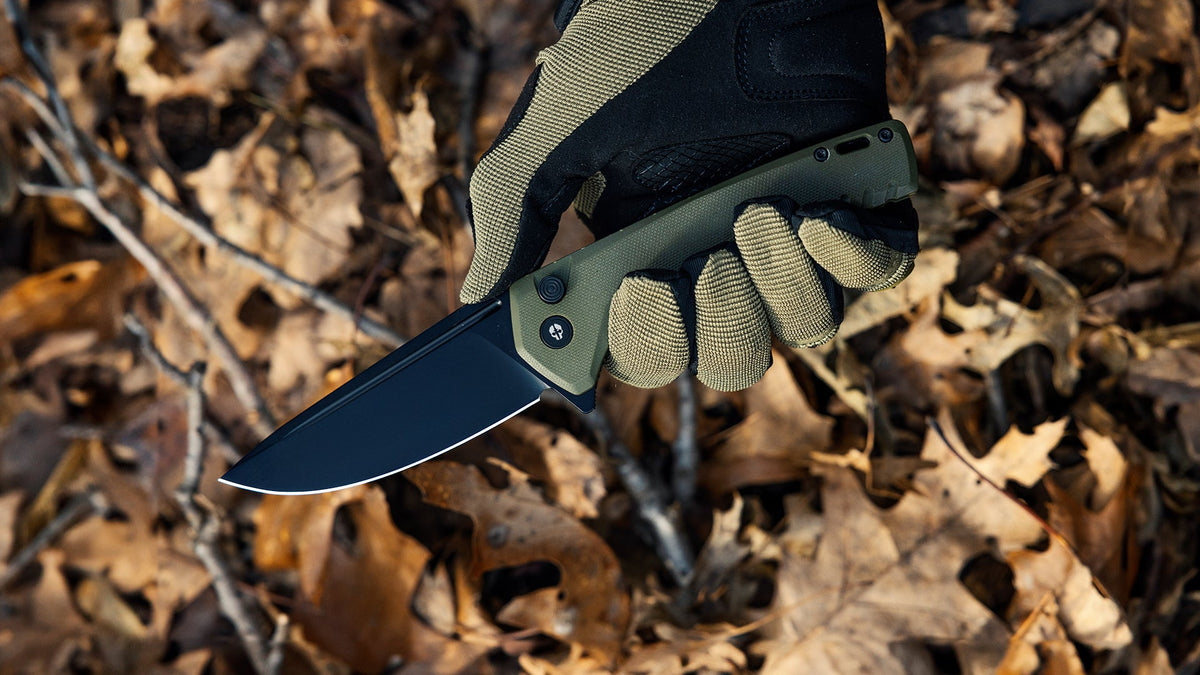
Camping and survival sound like the same thing until the weather turns. A camping knife is built for the ordinary jobs of a trip that is going well: food, cord, packaging, a tent stake that needs a point. A survival knife is built for the trip that is not: shelter, fire, splitting wood, and being far enough from the car that the knife has to do everything. They are different tools, and this is how to tell which one you need. TEKTO's fixed blade is the X1 Atlas, a 3.30-inch CPM MagnaCut drop point with a Kydex sheath that sits between the two sizes, and the folders for the camping side are the F2 Bravo and the F3 Charlie.
Type of Knife
A survival knife is almost always a fixed blade, with the steel running through the handle in one piece, because that is what survives being hammered through a log or levered against a root. A camping knife is more often a folding knife: the blade closes into the handle, it rides in a pocket, and it comes out for the small jobs that make up most of any trip. A folder with a strong lock, such as the button lock on the F3 Charlie, covers more of those jobs than people expect.
Size of Blade
Survival knives run larger and thicker, typically 5 to 7 inches of blade at 1/8 inch or more, so they can chop, baton and dig without flexing. Camping knives sit at 3 to 4 inches, which is the right size for cutting rope, preparing food and whittling, and the wrong size for splitting firewood. The X1 Atlas, a 3.30-inch MagnaCut fixed blade, sits between the two: fixed-blade strength at a size that still carves.
Expected Uses
A survival knife is asked to do the work of several tools: build a shelter, prepare tinder and strike a fire, process food, cut bandages. Strength and reliability matter more than finesse, and weight is the price. A camping knife is asked to do ordinary things well: open a food pouch, trim a guy line, cut a branch for a marshmallow, fix a strap. It is light, it is always in the pocket, and it gets used ten times a day. Our bushcraft vs survival guide goes deeper on the fixed-blade end of the range.
Which One to Buy
If the trip is a campground, a cabin or a day hike, buy the folder. It will do everything the trip asks and you will carry it long after the trip is over. If the trip is backcountry, winter, or anywhere help is a day away, buy the fixed blade and keep the folder in the pocket as the second knife. Most people who spend real time outdoors end up with both, and the folding vs fixed blade guide explains why the two make a better pair than either does alone.
A Folder for Camp, a Fixed Blade for the Rest
The F3 Charlie and F1 Alpha are the camp folders. The X1 Atlas is the fixed blade that goes further.


People Are Asking
Is a folding knife enough for camping?
For most car camping and short trips, yes. A 3-to-4-inch folder with a solid lock handles food, cord, packaging and small repairs, and it rides in a pocket. Add a fixed blade when the trip involves processing firewood or being far from help.
What size should a survival knife be?
A blade of 5 to 7 inches and at least 1/8 inch thick covers batoning, shelter work and food without becoming a machete. Longer blades chop better and carve worse. Most people are better served in the middle of that range.
Can I carry both?
That is the usual answer. A fixed blade on the belt or in the pack for the hard work, a folder in the pocket for everything that comes up ten times a day. The folder gets used far more. The fixed blade earns its place the one time it is needed.
Does the steel matter more than the size?
For a camp knife, size and lock matter more. Any decent steel will hold up over a weekend. For a survival knife that will see wet weather and hard use, a corrosion-resistant steel such as MagnaCut or a coated tool steel saves you from babying it.