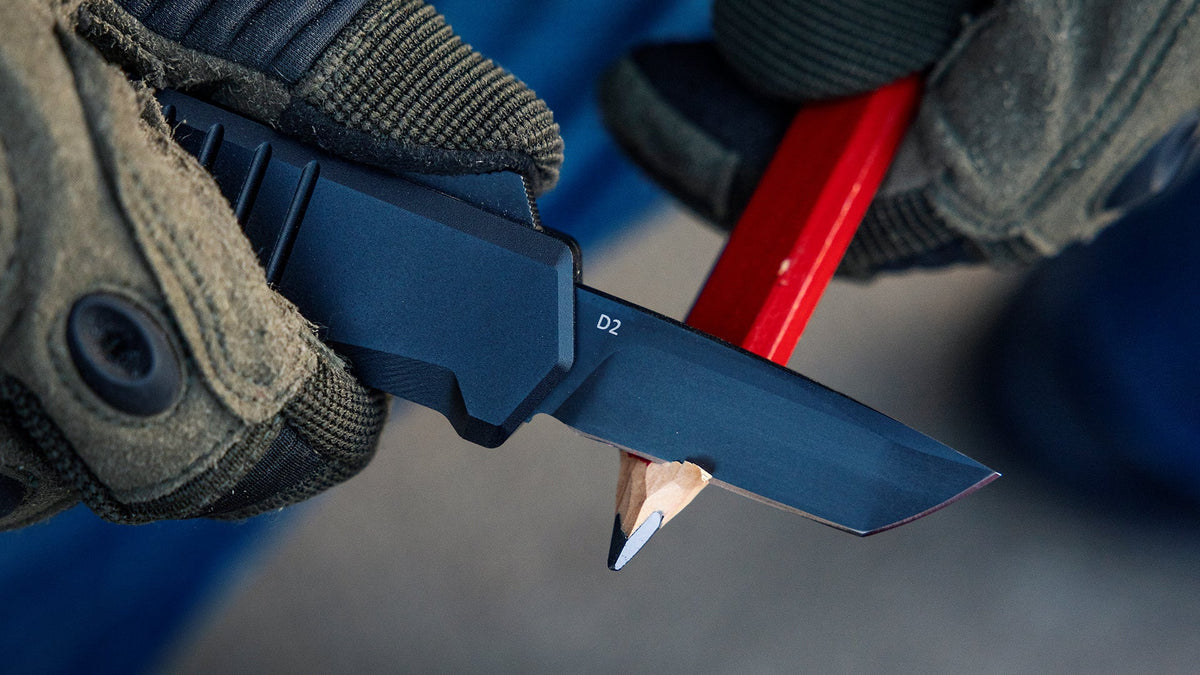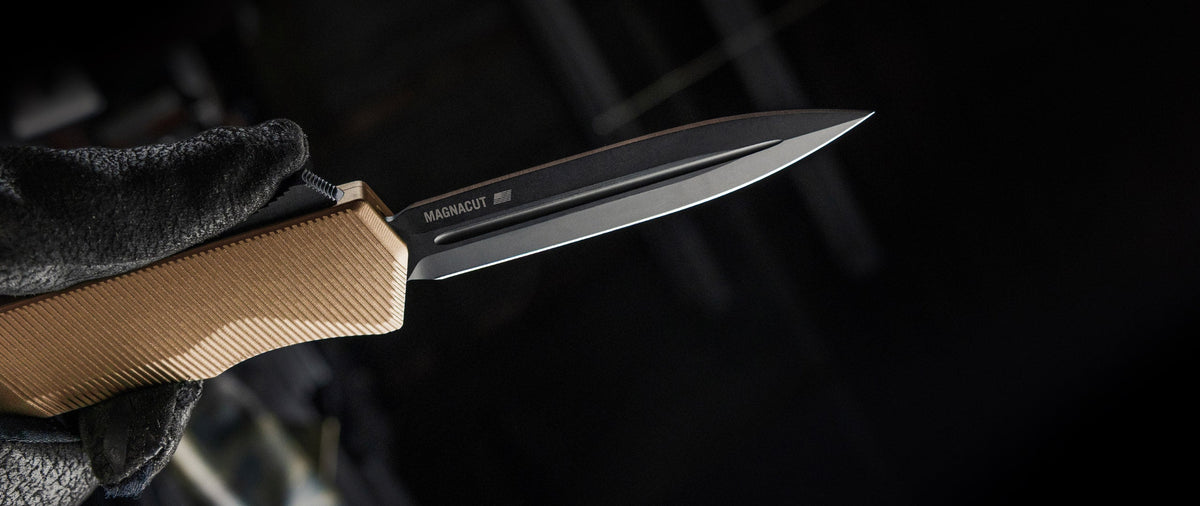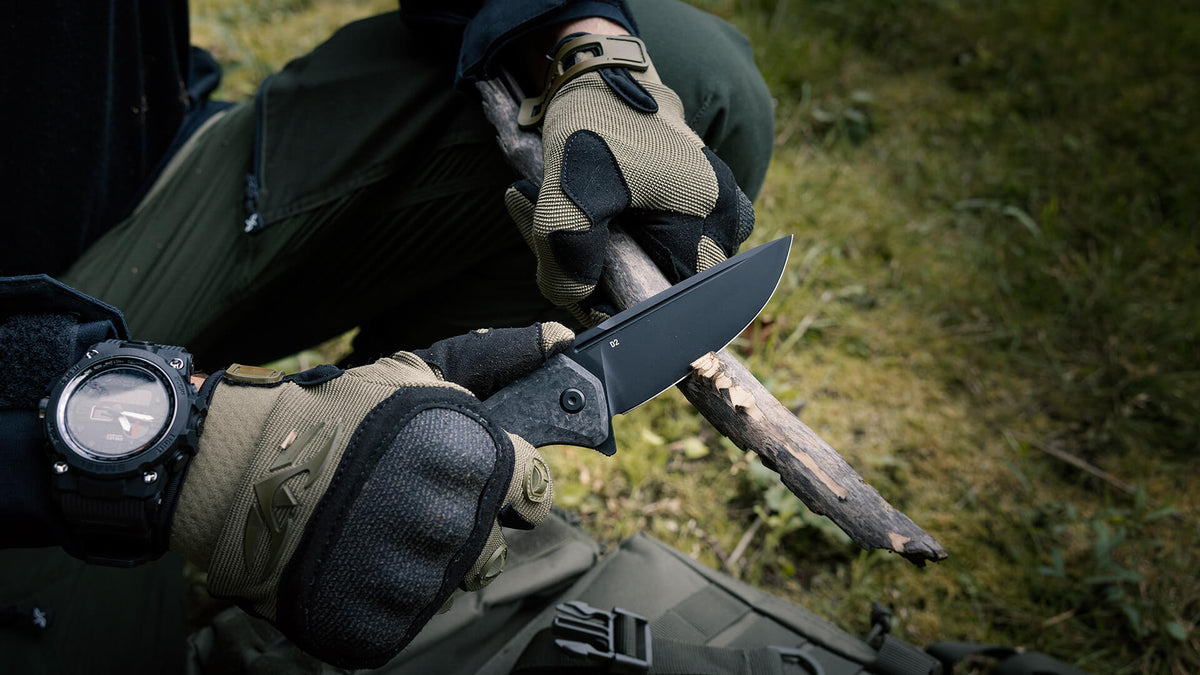
In a folding knife, the finish on the blade changes how it performs, how it ages and how it looks. A coated blade carries a thin layer over the steel: a paint or powder finish at the simple end, a ceramic such as Cerakote in the middle, and at the top a vapor-deposited layer such as titanium nitride or DLC that is measured in microns and bonded to the metal. Whether you want one depends on what the knife is for.
Why Coat a Blade
The first reason is rust. Stainless steels resist it on their own. The high-carbon tool steels that hold the best edges, D2 among them, do not, and a coating keeps moisture off the flats of the blade. The second is wear: a hard coating shrugs off the scratches that a bare blade collects from keys and pocket grit. A coating also cuts glare, which hunters appreciate, and the smoothest ones lower friction so the blade draws through material with less drag.
What a Coating Gives You
- Corrosion resistance. A blade finished in titanium nitride, DLC or a quality PVD coating is far harder to rust than the bare steel beneath it, which matters for a knife that lives in a pocket through sweat and weather.
- Scratch resistance. Hard coatings keep a blade looking new through years of use. Softer ones at least hide the marks.
- Less glare. A matte finish does not flash in sunlight, a small thing in the field that some people care about a lot.
- Looks. A black blade in a forged carbon handle is a different object from a bright one, and many people buy on that alone.
- Less drag. The slickest coatings reduce friction through the cut, noticeable when skinning or slicing anything sticky.
What It Costs You
- Wear. Every coating wears eventually, starting at the edge, where sharpening removes it on the first pass. A well-used coated blade shows a bright edge line and a darker flat, which some people like and some do not.
- Repair. Once a coating is scratched through, it cannot be touched up at home. The choice is to live with it or have the blade stripped and recoated.
- Price. A vapor-deposited coating adds real cost to a knife. Paint does not, and performs like paint.
- Thickness. A thick or badly applied coating can change how the blade feels through a cut. The good ones are thinner than a hair and you will never notice.
- Food. Not every coating is meant to touch food. Titanium nitride and DLC are inert. A painted blade is not the one to slice an apple with.
Choosing Between Them
If the knife will see sweat, salt water or a toolbox, a coated blade earns its keep. If you sharpen often, like the look of steel, or want a blade that will never look patchy, go bare and keep a film of oil on it. Several TEKTO blades, the A2 Badger and A5 Spry Mini among them, carry a titanium coating over the steel, and most models list the blade finish with the handle option on the product page. Either way the edge is the same bare metal, and the steel underneath matters more than what is on top of it.
Coated and Bare, Side by Side
The Badger and Spry Mini carry titanium-coated blades. The folders list their blade finish with each handle option.
-
-


A5 Spry Mini
Regular price $179.99Regular priceUnit price per -
-


People Are Asking
Does a coating make a knife blade sharper?
No. The edge is bare steel on every blade, coated or not, because sharpening removes the coating along the edge on the first pass. A coating protects the flats of the blade. The steel decides how sharp it gets and how long it stays that way.
Will a blade coating wear off?
Yes, with use. A titanium nitride or DLC coating lasts years on a pocket knife. A paint or powder finish shows wear within months of hard use. Wear is cosmetic on a stainless or high-chromium steel. On a plain carbon steel it exposes metal that will need oil.
Is a coated blade safe for food?
Vapor-deposited coatings such as titanium nitride and DLC are inert and fine for cutting food. Paints and some spray-on finishes are not meant for it. If you will use the knife on food, check what the coating is before you buy.
Which TEKTO knives have coated blades?
The A2 Badger (titanium-coated D2) and the A5 Spry Mini (titanium-coated S35VN) among the automatics. Other models list the blade finish alongside the handle option, so check the variant you are choosing on the product page.